Colostrum for the Sniffle Season: Building a Fall and Winter Routine
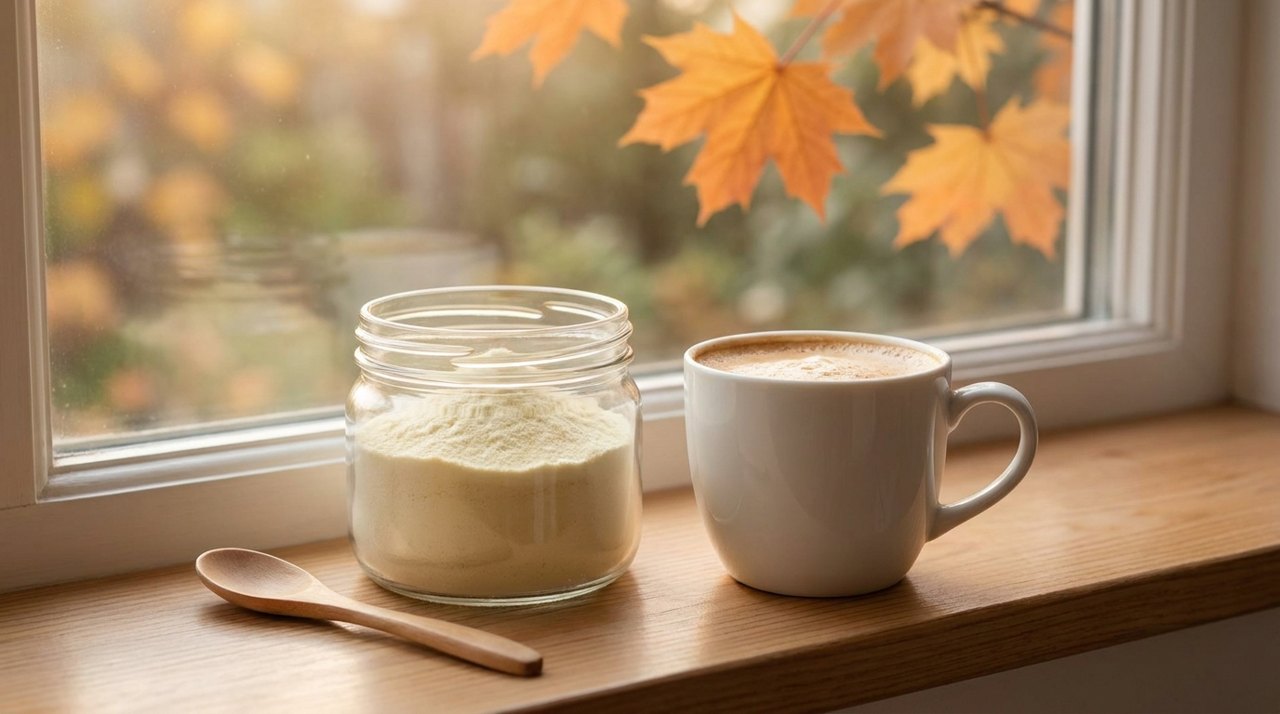
Every autumn the same thing happens: the mornings turn crisp, the office coffee machine gets busier, and someone on the train starts sniffling. Colostrum will not make you bulletproof, and we would be suspicious of anyone who says it will. But research does suggest it may support the way your gut and immune system communicate, which is exactly the system working overtime from October through March. Here is how to build a sensible, low-fuss fall and winter routine around it.
Why the cold months feel harder on your body
There is nothing mystical about "sniffle season." A few ordinary factors stack up at once. People spend more time indoors and closer together, so respiratory viruses circulate more easily. Indoor heating dries out the mucous membranes in your nose and throat, which are part of your first line of defence. Daylight shrinks, sleep often gets worse, and holiday stress and richer food tend to arrive together.
None of that is a disease to be treated. It is simply a season when your body's baseline maintenance systems, including the immune tissue lining your gut, are under a little more pressure. That is where a daily colostrum habit fits: as a supportive routine, not a cure.
What colostrum may bring to the table
Bovine colostrum is the first milk a cow produces after calving. It is naturally rich in immunoglobulins (mostly IgG), lactoferrin, proline-rich polypeptides, and a range of growth factors. Roughly 70 percent of your immune activity is associated with the gut, so it makes sense that most colostrum research focuses on the gut lining rather than on the nose and throat directly.
What does the evidence actually say? A handful of small trials, several in athletes doing heavy training, have reported fewer self-reported upper respiratory symptoms in people taking colostrum compared with placebo. Other studies have found modest effects on markers of gut permeability. These are encouraging signals, but they are small studies with varying doses and products, and not all of them agree. We think the honest summary is: colostrum may help support normal immune and gut function, and the science is still maturing.
If you want to dig into the growth-factor side of the story, we covered it in detail in Growth Factors in Colostrum: IGF-1, TGF-β and What They Mean for Adults.
Building the routine: a simple three-part framework
A supplement only works if you actually take it, and consistency matters more than heroics. We suggest thinking in three layers.
1. The daily anchor
Pick one moment you already never skip and attach colostrum to it. For most people that is the first glass of water or the morning coffee. One scoop of unflavored powder dissolves easily into either, and taking it on a relatively empty stomach is a common preference, though there is no strong evidence that timing changes much. Do it at the same time every day and it stops being a decision.
2. The seasonal ramp
Rather than starting colostrum the day you feel a tickle in your throat, begin in late September or early October and keep going through the end of winter. The research that shows benefits generally involves several weeks of daily use, not a single dose. Think of it the way you think of a flu shot appointment or swapping your wardrobe: a seasonal habit you start before you need it.
3. The supporting cast
Colostrum is one piece. The rest of a good winter routine is unglamorous and free:
- Sleep. Seven to nine hours, kept as regular as possible when the clocks change.
- Vitamin D. Many adults in northern latitudes run low from November onward. Worth discussing a blood test with your doctor.
- Hydration and humidity. Dry indoor air irritates airways; a bedroom humidifier and plenty of water help.
- Hand washing. Still the single most effective thing you can do.
- Fibre and fermented foods. Your gut bacteria feed on them, and colostrum appears to work alongside a healthy microbiome rather than replacing it.
How much, and what to look for
Clinical studies have used a wide range, from around 500 mg up to 20 g or more per day, so there is no single "right" dose. Most everyday users land somewhere between 1 and 3 g daily, and it is reasonable to start at the lower end and see how you feel over a few weeks.
Quality varies enormously between products, and this matters more with colostrum than with most supplements because the active components decline quickly after birth. Here is what we would check on any label:
| What to check | Why it matters |
|---|---|
| Harvest window | Immunoglobulin and lactoferrin levels are highest in the first milking; a 6-hour window preserves more of them than 24 or 48 hours. |
| Grass-fed, pasture-raised | Reflects the animal's diet and welfare, and tends to correlate with cleaner sourcing. |
| Additives and fillers | Flavourings, sweeteners and flow agents dilute the dose per scoop. |
| Third-party testing | Confirms purity and that what is on the label is in the tub. |
| Processing method | Low-heat processing helps keep proteins intact. |
Our own Bluegrass Colostrum was designed with exactly that checklist in mind: first-milking, harvested within 6 hours of calving, from grass-fed cows in the USA, with nothing added and every batch third-party tested. Sixty servings takes you comfortably from the first frost to the first crocuses.
A sample winter week
- Morning: one scoop of colostrum in water or coffee before breakfast.
- Midday: a walk outside for daylight, even ten minutes helps mood and sleep.
- Evening: a fibre-rich dinner, phone out of the bedroom, lights down by ten.
- Weekly: restock the fruit bowl, run the humidifier, check you have not skipped more than a day or two.
Who should be cautious
Colostrum is a dairy product. If you have a milk protein allergy, avoid it. If you are lactose intolerant, note that colostrum contains less lactose than regular milk, but not zero, so start small. Anyone pregnant, breastfeeding, immunocompromised or on prescription medication should talk with a healthcare professional first. And if you develop a fever, persistent cough or symptoms that concern you, see a doctor rather than reaching for a supplement.
Finally, if you are wondering whether a habit like this is sensible to keep up all winter and beyond, we looked at that question in Taking Colostrum for Months or Years: What We Know About Long-Term Use. The short version: the safety record for healthy adults looks reassuring, but the long-term data is still thinner than we would like, which is a good reason to stay consistent, stay observant, and keep the rest of your routine honest.
These statements have not been evaluated by the Food and Drug Administration. This product is not intended to diagnose, treat, cure, or prevent any disease.