Colostrum vs. Collagen: Which One Fits Your Routine?
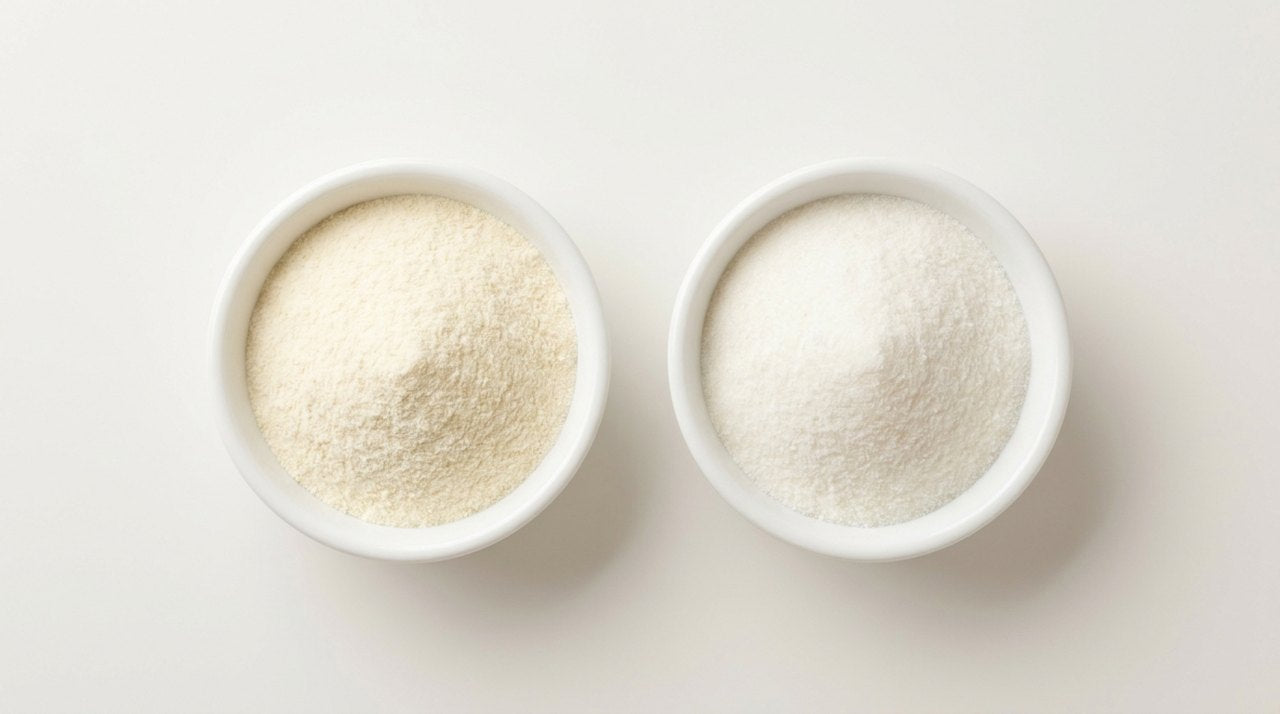
Walk down the supplement aisle or scroll through any wellness feed, and you will likely spot two very popular, unflavored powders making their way into morning coffees and post-workout smoothies: colostrum and collagen. While they might look nearly identical in the jar, these two whole-food supplements serve entirely different functions in the body. If you are trying to decide which one deserves a spot in your daily regimen—or if you should be taking both—understanding their unique biological mechanisms is the best place to start.
Understanding the Basics
What is Collagen?
Collagen is the most abundant protein in the human body. Think of it as the biological scaffolding that holds everything together. It provides essential structure and elasticity to your skin, bones, tendons, ligaments, and cartilage. As we age, our natural collagen production gradually begins to decline, which is why collagen peptides (usually sourced from bovine hide or marine scales) have become a staple for those looking to support skin hydration and joint health.
When you consume a collagen supplement, you are not absorbing whole collagen directly into your skin or joints. Instead, you are providing your body with a concentrated dose of specific amino acids—primarily glycine, proline, and hydroxyproline. Your body then uses these raw materials to build and repair its own connective tissues.
What is Bovine Colostrum?
Colostrum, on the other hand, is much more than a structural protein. It is the very first milk produced by mammals immediately after giving birth. Designed by nature to jumpstart a newborn's immune system and digestive tract, bovine (cow) colostrum is a complex, bioactive whole food packed with compounds that you simply cannot find in standard protein powders.
It contains a rich matrix of immunoglobulins (antibodies like IgG), lactoferrin, proline-rich polypeptides, and various growth factors. Rather than just providing passive structural building blocks, colostrum acts more like a biological communication system. It sends signals that may help regulate immune function, support cellular repair, and maintain a healthy environment in the gut.
Head-to-Head: Structure vs. System
To simplify the distinction, think of collagen as the materials needed to build a house (the bricks, mortar, and wood). Colostrum, by contrast, is the project manager ensuring the systems inside the house (the plumbing, electricity, and security) are communicating and functioning optimally.
| Feature | Collagen Peptides | Bovine Colostrum |
|---|---|---|
| Primary Source | Bovine hide, bones, or marine scales | The first milk produced after calving |
| Key Components | Amino acids (glycine, proline, hydroxyproline) | Immunoglobulins (IgG), lactoferrin, growth factors |
| Main Focus | Structural support (skin, hair, nails, joints) | Systemic support (gut lining, immune response) |
| Recommended Timing | Anytime, with or without food | Often best on an empty stomach |
Comparing the Benefits: Where Do They Excel?
Skin Health and Aging
Both powders are frequently praised in the beauty and longevity space, but they approach skin health from completely different angles. Collagen supplies the direct amino acids that research suggests may improve skin hydration and elasticity over time, helping to smooth the appearance of fine lines.
Colostrum supports the skin indirectly but powerfully. It contains epithelial growth factor (EGF), which may help support normal cellular turnover and tissue repair. Furthermore, colostrum's profound impact on the gut microbiome often translates to the skin through the gut-skin axis. A happier, more balanced digestive tract can frequently result in a clearer, more radiant complexion, meaning colostrum addresses skin health from the inside out.
Gut Health and Digestion
If your primary goal is supporting your digestive tract, colostrum is generally considered the heavyweight champion. While collagen does provide glutamine—an amino acid that serves as fuel for intestinal cells—colostrum is uniquely equipped to support the delicate gut barrier.
The immunoglobulins and growth factors in colostrum have been shown in emerging research to help maintain the integrity of the intestinal lining, which is vital for nutrient absorption and keeping unwanted toxins out of the bloodstream. However, the concentration of these beneficial compounds is highly dependent on when the colostrum is harvested. For instance, understanding why the first 6 hours matter is crucial, as first-milking colostrum yields a significantly higher concentration of protective bioactives compared to transitional milk collected days later.
Immune Support and Athletic Recovery
Collagen is highly beneficial for joint and tendon recovery post-exercise, making it a favorite among runners, weightlifters, and active individuals looking to prevent structural wear and tear.
However, intense exercise can temporarily stress the immune system and the gut lining (a phenomenon often referred to as "runner's gut"). This is where colostrum truly shines. The lactoferrin and antibodies present in colostrum may help support the body's natural immune defenses during periods of physical or environmental stress, promoting a more balanced, holistic recovery that goes beyond just muscle and joint repair.
Can You Take Colostrum and Collagen Together?
Absolutely. Because they serve completely different biological functions, colostrum and collagen are highly complementary. Combining them does not cause them to compete for absorption in the digestive tract; instead, it offers a well-rounded approach to supporting both your structural tissues and your internal mucosal systems.
If you decide to combine them, you might simply mix them into the same beverage. Because high-quality options like Bluegrass Colostrum are completely unflavored and dissolve easily without clumping, they make a seamless addition to your morning collagen coffee, matcha, or post-workout shake.
That said, if you want to strictly optimize the absorption of colostrum's delicate bioactive compounds, timing can play a role. Many experts suggest taking colostrum first thing in the morning on an empty stomach to allow it to coat the gut lining, while collagen can be taken at any point in the day. If you are curious about fine-tuning your routine, you can read more about when to take colostrum for optimal results.
Which One Fits Your Routine?
Choosing between the two ultimately comes down to identifying your primary wellness goals for the season ahead.
- Choose Collagen if: Your main priorities are supporting joint mobility, strengthening brittle nails, or maintaining skin elasticity. If you are actively recovering from a structural issue like a tendon strain, collagen provides the specific amino acid materials your body needs to rebuild those connective tissues.
- Choose Colostrum if: You are looking for holistic, systemic support. If you want to support a healthy gut lining, maintain a balanced immune system, or enhance your body's natural recovery processes after travel, stress, or intense exercise, colostrum offers a complex matrix of bioactive compounds that standard proteins simply cannot replicate.
- Choose Both if: You want a comprehensive, full-body approach to aging and vitality. Supplying your body with the structural building blocks of collagen while simultaneously supporting your gut barrier and immune function with colostrum is a powerful, evidence-minded way to invest in your long-term daily wellness.
These statements have not been evaluated by the Food and Drug Administration. This product is not intended to diagnose, treat, cure, or prevent any disease.