Colostrum vs. Probiotics: Rivals or Teammates for Gut Health?
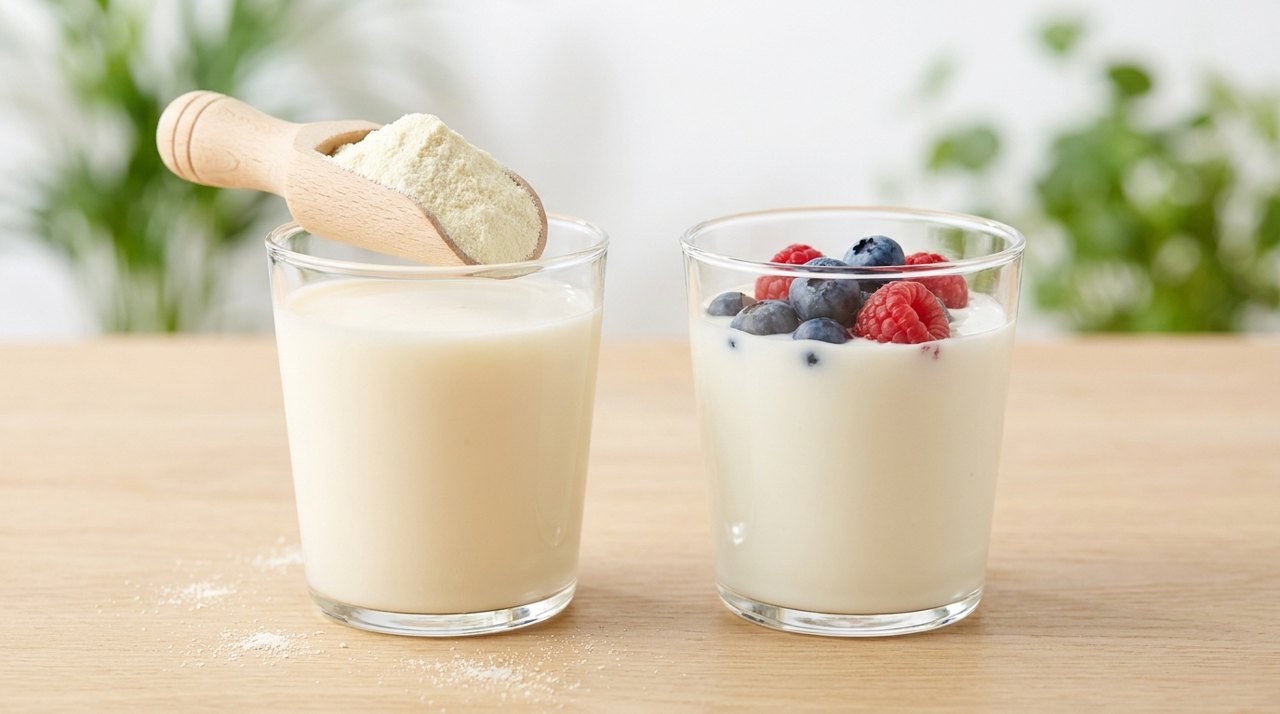
Walk down any supplement aisle and you'll find colostrum and probiotics sitting side by side, both promising a happier gut. It's tempting to treat them as competitors and ask which one "wins." But that framing misses something important: they work in fundamentally different ways. Probiotics add microorganisms to your gut; colostrum provides nourishment and signaling compounds that may help support the environment those microorganisms live in. Understanding that distinction is the key to deciding whether you need one, the other, or both.
Two Different Tools for the Same Job
Think of your gut as a garden. Probiotics are like adding new plants — live bacterial strains such as Lactobacillus and Bifidobacterium introduced in the hope that they'll take root, at least temporarily, and contribute to a balanced microbial community.
Colostrum, by contrast, is more like tending the soil. It's the nutrient-dense first milk mammals produce in the hours after giving birth, and it contains no live probiotic cultures at all. Instead, it delivers a package of bioactive compounds — immunoglobulins (notably IgG), lactoferrin, growth factors, andprebiotic oligosaccharides — that research suggests may help support the gut lining and its resident microbes.
How Probiotics Work
Probiotics are, by definition, live microorganisms that may confer a health benefit when consumed in adequate amounts. Their proposed roles include:
- Temporarily adding to the diversity of bacteria in the digestive tract
- Competing with less desirable microbes for space and resources
- Producing short-chain fatty acids and other metabolites as they ferment fiber
The catch is that probiotics are often transient. Many strains pass through without permanently colonizing, and effects tend to be strain-specific — meaning results from one product don't necessarily transfer to another. They also need something to feed on, which is where prebiotic fibers (and, interestingly, some components of colostrum) enter the picture.
How Colostrum Works
Rather than adding bacteria, colostrum supplies materials that may help maintain the terrain. A few of its most-studied components:
Immunoglobulins
Antibodies like IgG make up a large share of colostrum's protein. In the gut, they may help bind to microbes and support the body's normal immune balance at the mucosal surface. If you're curious about the science here, our explainer on what IgG actually is breaks it down without the jargon.
Lactoferrin
This iron-binding protein has been studied for its role in helping regulate the growth of certain bacteria while sparing beneficial ones — a nuanced effect that's still being characterized in research.
Growth factors and oligosaccharides
Colostrum contains growth factors that may support the turnover and integrity of the cells lining the intestine, along with oligosaccharides that can act as prebiotics — potential food for the very bacteria that probiotics aim to bolster.
Rivals or Teammates?
Here's the honest answer: they're not really rivals at all. Because probiotics are the beneficial bacteria and colostrum supports the environment for bacteria, the two approaches are complementary in principle. A well-formulated grass-fed powder like Bluegrass Colostrum is sometimes used alongside a probiotic for exactly this reason — one supplies the microbes, the other supplies nourishment and structural support for the gut environment.
That said, the evidence for combining them is still emerging, and much of the promising research on colostrum's gut effects comes from small studies or animal models. We'd be overstating things to promise a specific outcome. What we can say is that the mechanisms don't compete — and for many people, that makes the "either/or" question the wrong one.
| Probiotics | Colostrum | |
|---|---|---|
| What it is | Live bacterial cultures | Bioactive first-milk compounds |
| Primary approach | Adds microbes | Supports the gut environment |
| Contains live bacteria? | Yes | No |
| Key components | Specific strains | IgG, lactoferrin, growth factors, oligosaccharides |
If You Want to Try Both
There's no universal protocol, but a few practical considerations may help:
- Introduce one at a time. Starting them a week or two apart makes it easier to notice how your body responds to each.
- Mind the timing. Some people prefer colostrum away from food; you can read our take on whether to take colostrum on an empty stomach to decide what fits your routine.
- Start low and go slow. A smaller initial serving of either can ease the transition while you gauge tolerance.
A note on suitability: because bovine colostrum is a dairy-derived product, it isn't right for everyone. If you have a dairy allergy, avoid it entirely, and if lactose is a concern, our guide on colostrum and lactose intolerance is worth a read. It's also wise to review the general side effects and safety considerations before starting, and to check with a healthcare professional if you're pregnant, nursing, immunocompromised, or managing a health condition.
The Bottom Line
Colostrum and probiotics aren't fighting over the same job. Probiotics deliver live bacteria; colostrum offers nourishment and signaling compounds that may help support the environment those bacteria depend on. Framed that way, they look less like rivals and more like potential teammates — each covering ground the other doesn't. As always, individual responses vary, the research is still developing, and the best plan is one you build in conversation with someone who knows your health history.
These statements have not been evaluated by the Food and Drug Administration. This product is not intended to diagnose, treat, cure, or prevent any disease.