Colostrum for Skin, Hair, and Nails: What's Realistic?
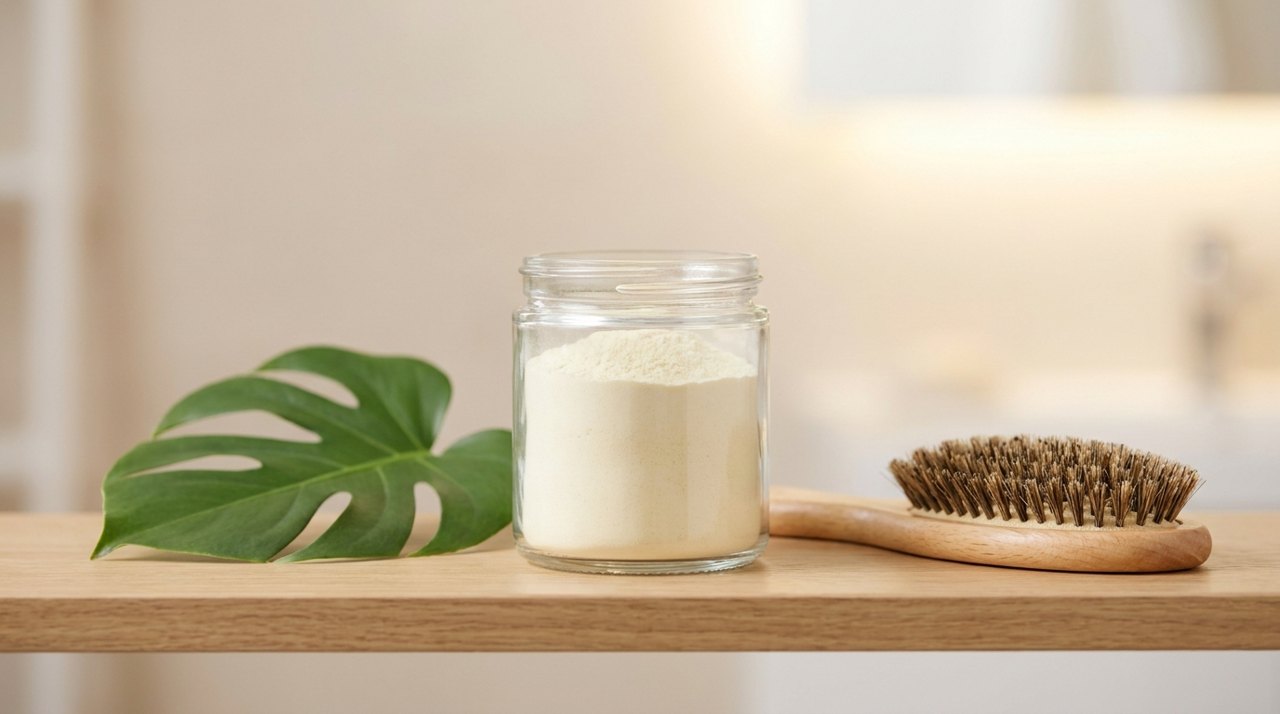
Colostrum has quietly become a favorite in the beauty-and-wellness world, with fans crediting it for glowier skin, thicker hair, and stronger nails. It's an appealing idea — one powder that supports how you look from the inside out. But how much of that is grounded in evidence, and how much is hopeful marketing? Let's walk through what colostrum actually is, the mechanisms that make the skin-hair-nails claims plausible, and where the research is genuinely thin so you can set realistic expectations.
Why people connect colostrum to beauty in the first place
Bovine colostrum is the first milk a cow produces after calving. It's nutritionally dense and rich in bioactive compounds — immunoglobulins, lactoferrin, and notably growth factors such as IGF-1, EGF (epidermal growth factor), and TGF-beta. Because some of these compounds play roles in cell growth, tissue repair, and collagen signaling in the body, it's easy to see why colostrum gets linked to skin renewal and hair growth. The logic isn't baseless — but a mechanism that exists in a petri dish or in a cow's calf doesn't automatically translate into visible cosmetic results for a person taking a daily scoop.
What the evidence actually supports
Here's the honest picture: the strongest, most consistent research on oral bovine colostrum centers on gut and immune support, not beauty outcomes. Skin, hair, and nail benefits are largely extrapolated from indirect mechanisms rather than demonstrated by robust human trials.
Skin
The most plausible pathway runs through the gut. A growing body of research on the "gut-skin axis" suggests that intestinal health and inflammation may influence skin appearance, and colostrum's compounds like lactoferrin and growth factors may support the gut lining. If your gut environment improves, your skin may reflect that over time — but this is an indirect, individual, and not-yet-proven-for-skin effect. Topical growth factors have their own skincare research; swallowing colostrum is a very different route, and digestion breaks down many proteins before they reach circulation.
Hair and nails
Claims here are the most speculative. Hair and nails are built largely from keratin, and their condition depends on overall protein status, key micronutrients (iron, zinc, biotin), and hormones. Colostrum contributes protein and trace nutrients, so adequate nourishment is a reasonable supporting role — but there's little direct human evidence that colostrum specifically thickens hair or hardens nails beyond what good general nutrition already provides.
| Claim | Proposed mechanism | Strength of evidence |
|---|---|---|
| Clearer, more resilient skin | Gut-skin axis; growth factors | Indirect, plausible, not proven |
| Thicker or faster-growing hair | Protein and micronutrient support | Weak; mostly extrapolation |
| Stronger nails | Protein and trace nutrients | Weak; general-nutrition effect at best |
Does the source of the colostrum matter?
If you're going to try colostrum for these reasons, quality is worth paying attention to — because the bioactive compounds behind the theoretical benefits are fragile and concentration-dependent. Colostrum's growth factors and immunoglobulins are most abundant in the very first milking, and they decline quickly in the hours after calving. That's the reasoning behind our Bluegrass Colostrum, which is harvested within the first six hours and left unflavored with no additives. If you want the deeper explanation of why timing changes the composition, we covered it in Why the First 6 Hours Matter.
Setting realistic expectations
If you decide to try colostrum with skin, hair, or nails in mind, go in with a calibrated outlook:
- Think months, not days. Any effect on skin or hair would follow slow biological cycles — hair grows roughly a centimeter a month, and skin turns over on a scale of weeks.
- Treat it as support, not a fix. Colostrum is a dietary supplement, not a treatment. It won't cure or reverse a skin, hair, or nail condition, and persistent problems deserve a conversation with a clinician or dermatologist.
- Foundations first. Sleep, hydration, sun protection, adequate protein, and healthy iron and zinc status do far more for these tissues than any single supplement. Colostrum sits on top of those basics, not in place of them.
- Notice your own response. The most useful evidence is your own. Take before photos, keep other habits steady, and judge honestly after eight to twelve weeks.
How to fit it into a routine
There's no beauty-specific ritual required — consistency matters more than timing. Many people simply add a scoop to water or a smoothie each day. If you're curious whether morning or evening suits you better, we broke down the trade-offs in When to Take Colostrum. And if you're weighing colostrum specifically against collagen — the more established name in the skin-supplement space — our comparison in Colostrum vs. Collagen lays out how the two differ so you can decide whether to use one, the other, or both.
The honest bottom line
Colostrum is a genuinely interesting, nutrient-dense supplement with real mechanistic reasons it could support skin, hair, and nails — mainly through nourishment and gut health rather than any direct cosmetic action. But the human evidence for beauty outcomes specifically is limited, and anyone promising dramatic transformations is getting ahead of the science. Approach it as a supportive addition to solid fundamentals, give it time, and let your own results be the deciding vote.
These statements have not been evaluated by the Food and Drug Administration. This product is not intended to diagnose, treat, cure, or prevent any disease.