Grass-Fed vs. Organic Colostrum: What Each Label Really Guarantees
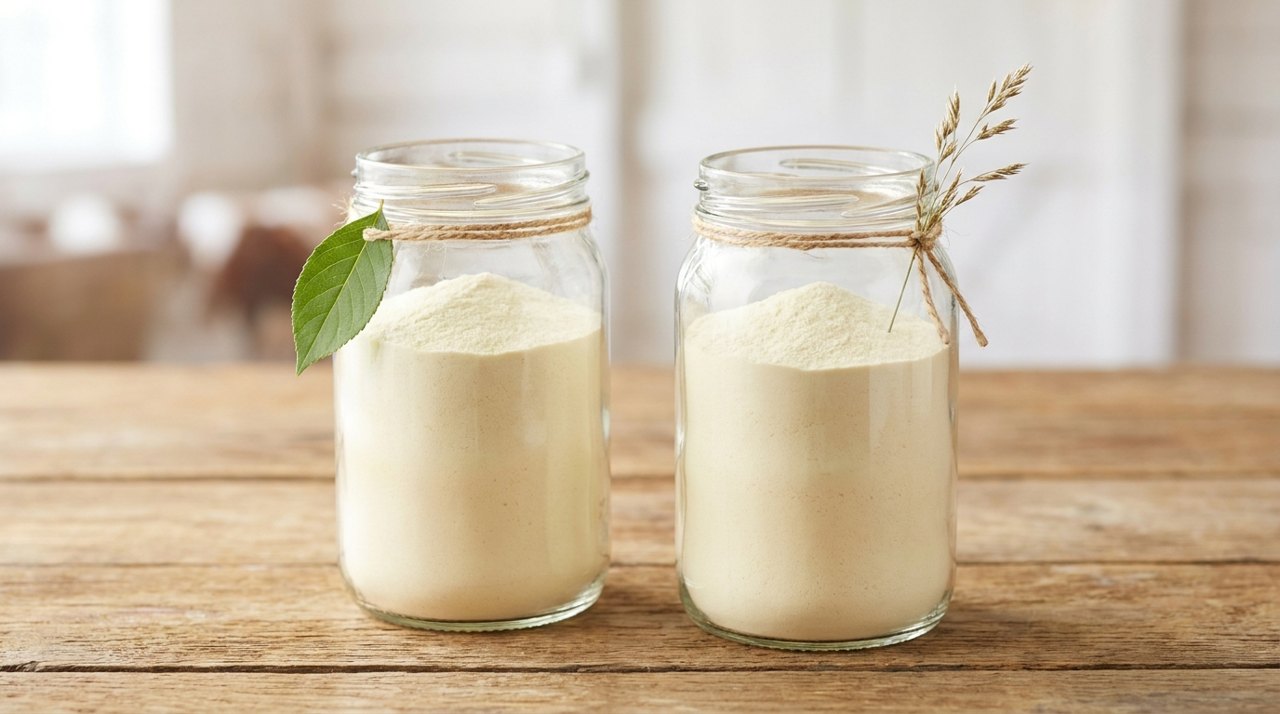
Walk down any supplement aisle — physical or digital — and you'll see colostrum tubs wearing badges like medals: grass-fed, organic, pasture-raised, hormone-free. These labels aren't interchangeable, and none of them tells the whole story. Understanding what each one actually guarantees (and, just as importantly, what it doesn't) is the difference between buying a marketing claim and buying a product you can trust.
What "Grass-Fed" Actually Guarantees
At its core, "grass-fed" describes the cow's diet: forage such as grass, hay, and pasture plants rather than a grain-heavy feedlot ration. That matters for colostrum because a cow's diet shapes her overall health and, potentially, the nutritional profile of what she produces. Research on grass-fed dairy more broadly suggests differences in fatty acid composition — for example, a more favorable omega-3 to omega-6 ratio — though studies specifically comparing grass-fed versus grain-fed colostrum are limited, and it's honest to say so.
Here's the catch: in the United States, "grass-fed" is not tightly policed on supplement labels. The USDA withdrew its official grass-fed marketing standard in 2016, which means the term can range from "cows on pasture year-round" to "cows that ate some grass at some point." A trustworthy brand should be able to tell you what their version of grass-fed actually means — and back it up with sourcing details, not just a green leaf on the label.
What grass-fed does not guarantee
- When the colostrum was collected (first milking vs. later, diluted milkings)
- Whether antibiotics or synthetic hormones were used
- How gently the colostrum was processed and dried
- Whether the finished powder was tested for purity or potency
What "Organic" Actually Guarantees
USDA Organic certification is a regulated, audited standard — and that's its real strength. For dairy, it requires organic feed (no synthetic pesticides or GMO crops), no antibiotics, no added growth hormones, and mandatory pasture access during the grazing season. Farms are inspected, records are kept, and the seal means something enforceable.
But notice what the certification is about: farming practices. Organic certification says nothing about the biological quality of the colostrum itself. An organic colostrum could still be collected from second or third milkings (when immunoglobulin levels have already dropped sharply), pooled with transition milk, or processed at high heat that may degrade its delicate proteins. Organic tells you how the cow was raised — not whether the powder in the tub is potent, pure first-milking colostrum.
What organic does not guarantee
- A fully grass-based diet (organic grain feed is permitted)
- Collection timing or immunoglobulin content
- Low-heat processing or third-party verification of the finished product
Side by Side: What Each Label Covers
| Question | Grass-Fed | USDA Organic |
|---|---|---|
| Diet is forage-based? | Yes (definition varies) | Not necessarily — organic grain allowed |
| No synthetic hormones? | Not guaranteed by the term itself | Yes, prohibited |
| No routine antibiotics? | Not guaranteed | Yes, prohibited |
| Independently audited? | Rarely (unless separately certified) | Yes, by USDA-accredited certifiers |
| First-milking collection? | No | No |
| Verified potency and purity? | No | No |
The last two rows are the ones most shoppers miss — and arguably the ones that matter most for colostrum specifically.
The Guarantees Neither Label Makes
Colostrum is unusual among supplements because timing defines the product. A cow produces true colostrum only briefly after calving; immunoglobulin concentration declines within hours as colostrum transitions toward regular milk. That's why collection window is arguably a bigger quality lever than either farm label. Our own Bluegrass Colostrum is harvested within six hours of calving from grass-fed herds precisely because no certification seal, however rigorous, addresses that window on its own.
Processing is the other silent variable. Colostrum's most interesting components — immunoglobulins, lactoferrin, growth factors — are proteins, and proteins are sensitive to heat. Low-temperature drying may help preserve them; aggressive processing likely doesn't. And because "may" is doing real work in that sentence, verification matters: the only way to know what's actually in a finished powder is independent lab analysis. We've written a full guide on how third-party testing works and how to check a brand's results, and we'd encourage you to apply it to any colostrum you're considering — ours included.
So Which Should You Choose?
If you're forced to pick between the two labels in isolation, it's genuinely a trade-off: organic gives you enforceable assurances about hormones, antibiotics, and feed inputs; grass-fed (when credibly documented) gives you a diet closer to what cows evolved to eat. But framing it as either/or misses the point. The better approach is to treat farm labels as one layer of a fuller checklist:
- Sourcing: grass-fed or organic, with the brand able to explain specifics
- Collection: first milking, within a defined window after calving
- Formulation: pure colostrum, no fillers, flavorings, or additives
- Processing: low heat, minimal handling
- Verification: third-party testing you can actually see
A product that checks four of those boxes but hides its sourcing — or wears an impressive seal while pooling late milkings — isn't the premium product its label suggests. If you've heard conflicting claims about what colostrum labels promise, our piece on colostrum myths worth retiring untangles a few more of them.
The Bottom Line
Grass-fed tells you about diet. Organic tells you about farming inputs and gives you an audit trail. Both are meaningful; neither certifies the thing that makes colostrum colostrum — early collection, careful processing, and verified purity. Read labels with that in mind, ask brands the questions the seals don't answer, and you'll be well equipped to judge any tub on its actual merits rather than its badges.
These statements have not been evaluated by the Food and Drug Administration. This product is not intended to diagnose, treat, cure, or prevent any disease.