Colostrum vs. Whey Protein: Same Cow, Very Different Jobs
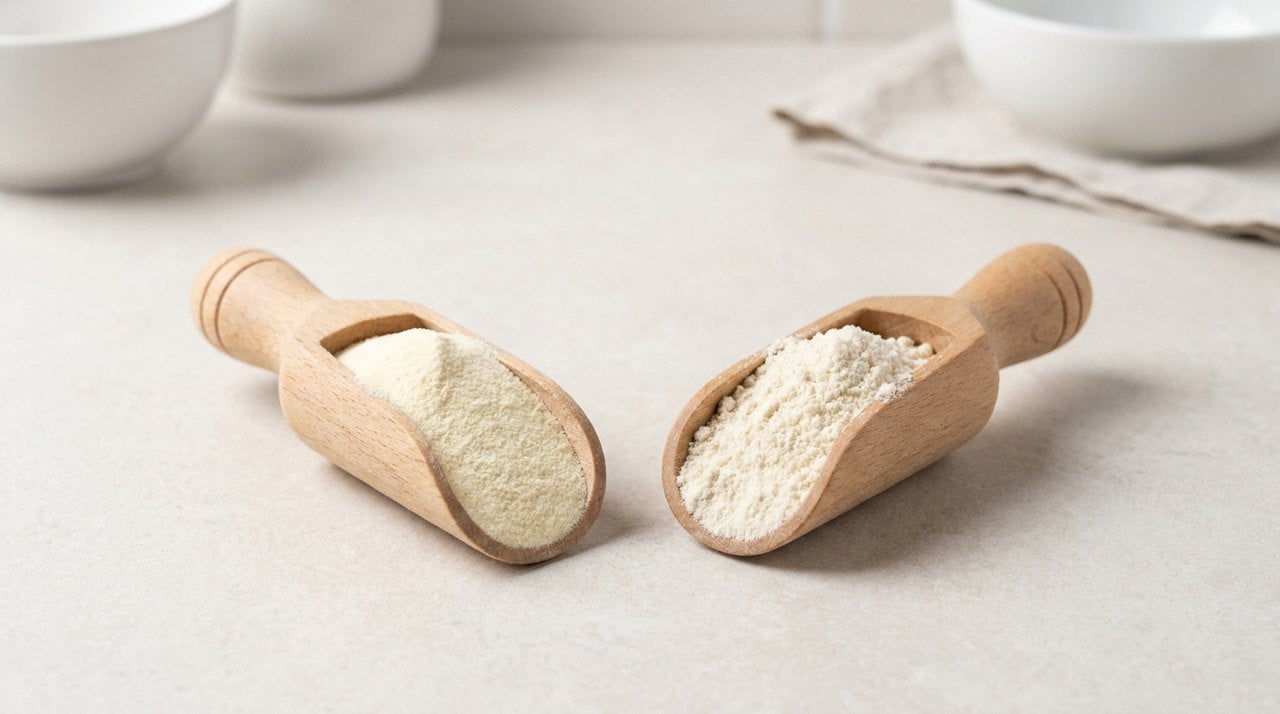
Colostrum and whey protein both come from cows, both arrive as tubs of powder, and both live on the same shelf at your local supplement shop. That's roughly where the similarities end. One is a concentrated source of protein for building and repairing muscle; the other is a biologically complex first food designed by nature to protect and prime a newborn. Understanding the difference will save you money, confusion, and the disappointment of asking one powder to do the other's job.
Where Each One Comes From
Whey protein is a byproduct of cheesemaking. When milk is curdled, the liquid that separates from the curds is whey. That liquid is filtered, concentrated, and dried into the whey concentrate or isolate you know. It can be produced year-round from any milking, in enormous volumes, which is why it's relatively inexpensive.
Colostrum is different in a way that matters biologically. It's the very first milk a cow produces in the days immediately after giving birth — a thick, nutrient-dense fluid meant to jump-start her calf's immune system and gut development. The earlier it's collected, the higher its concentration of bioactive compounds. That's why timing is a quality marker: colostrum from the first milking, collected within about six hours of calving, is meaningfully richer in immunoglobulins than colostrum pooled over the first several days. (Reputable producers always leave the calf's share first — quality colostrum and calf welfare aren't in conflict, a point we unpack in 5 Colostrum Myths It's Time to Retire.)
What's Actually in the Powder
On a nutrition label, both look like dairy powders with protein. Under the surface, the composition tells two very different stories.
| Whey Protein | Bovine Colostrum | |
|---|---|---|
| Primary purpose | Concentrated protein for muscle protein synthesis | Broad-spectrum bioactives for gut and immune support |
| Signature components | Branched-chain amino acids, especially leucine | Immunoglobulins (IgG, IgA, IgM), lactoferrin, growth factors, proline-rich polypeptides |
| Protein per serving | High (typically 20–30 g) | Modest (a few grams per serving) |
| Typical serving size | 25–35 g scoops | 1–2 g (small scoop or half-teaspoon) |
| Processing | Heavily filtered and refined | Ideally minimally processed to preserve fragile bioactives |
The immunoglobulin content is the headline difference. Whey contains only trace amounts of these antibody proteins. High-quality colostrum can be 20% or more IgG by weight — and those immunoglobulins, along with lactoferrin and growth factors like IGF-1, are the reason people take colostrum at all.
Different Jobs, Different Evidence
Whey: the muscle specialist
Whey's evidence base is deep and fairly settled. Decades of research support its role in muscle protein synthesis, recovery from resistance training, and hitting daily protein targets. If your goal is building or maintaining muscle, whey (or any quality protein source) is the right tool, and colostrum is not a substitute — at 1–2 grams per serving, it simply doesn't deliver meaningful protein.
Colostrum: the gut and immune generalist
Colostrum's research is younger and more modest, and it's worth being honest about that. Small human trials suggest bovine colostrum may help support the gut lining, particularly under stress — several studies in athletes found it may reduce markers of exercise-induced intestinal permeability. Other research suggests possible support for immune defenses during periods of heavy training. These are encouraging signals, not settled science: many studies are small, doses vary widely, and results aren't uniform. Colostrum is a dietary supplement, not a treatment for any condition, and anyone with a medical concern should talk to their doctor rather than a powder.
What we can say confidently is that colostrum's plausible benefits come from its bioactive compounds — which means quality and handling matter far more than they do for whey. Heat-heavy processing can denature immunoglobulins, and late-collected or diluted colostrum starts with less to preserve. That's why we harvest Bluegrass Colostrum from the first milking within six hours of calving, keep it 100% pure with no fillers or flow agents, and verify the results with third-party testing — because with colostrum, the label claim is only as good as the lab report behind it. (More on how to read those reports in Why Third-Party Testing Matters for Colostrum.)
Can You Take Both?
Yes — and many people do, because they're not competing for the same job. A sensible way to think about it:
- Whey is a food-scale macronutrient. Dose it by protein need, usually around workouts or to fill gaps in your diet.
- Colostrum is a small-dose bioactive. Most routines use 1–2 grams daily, often on an empty stomach in the morning, mixed into water or a smoothie.
There's no known conflict between them, though the same caveats apply to both: they're dairy-derived, so people with a true milk protein allergy should avoid them. Those with lactose intolerance often tolerate colostrum's small serving sizes better than a full whey shake, but individual responses vary.
How to Choose (and What to Skip)
If you're evaluating either powder, the buying criteria are almost opposite:
- For whey, prioritize protein per serving, digestibility, and taste — it's a commodity, and a good isolate from a reputable brand is hard to get wrong.
- For colostrum, prioritize collection timing (first milking is the gold standard), verified IgG content, minimal processing, purity (no fillers or flavors diluting the actual colostrum), and the sourcing behind it — pasture-raised, grass-fed herds are a meaningful signal, though the label language deserves scrutiny, which we break down in Grass-Fed vs. Organic Colostrum.
The most common mistake we see is treating colostrum like a protein powder — judging it by grams of protein per dollar. By that math, colostrum will always lose, because that was never its job. Judge whey by its protein and colostrum by its bioactives, and each one becomes easy to evaluate.
The Bottom Line
Same cow, very different jobs. Whey is a refined protein source with strong evidence for muscle and recovery. Colostrum is nature's first food — a small daily serving of immunoglobulins, lactoferrin, and growth factors that research suggests may support gut integrity and immune defenses, with the honest caveat that the science is still maturing. Neither replaces the other, and if you decide colostrum has a place in your day, consistency matters more than anything — a topic we cover in Building a Daily Colostrum Routine You'll Actually Stick With.
These statements have not been evaluated by the Food and Drug Administration. This product is not intended to diagnose, treat, cure, or prevent any disease.